Estimated tax penalty calculator (Form 2210)
Check whether you owe an underpayment penalty and how much paying now saves.
🔒 Runs in your browser — nothing you type is sent or stored
General information, not tax advice. A simplified estimate built from the official figures listed under Sources. Your actual result depends on your full return. Check with a tax professional before acting.
Sources
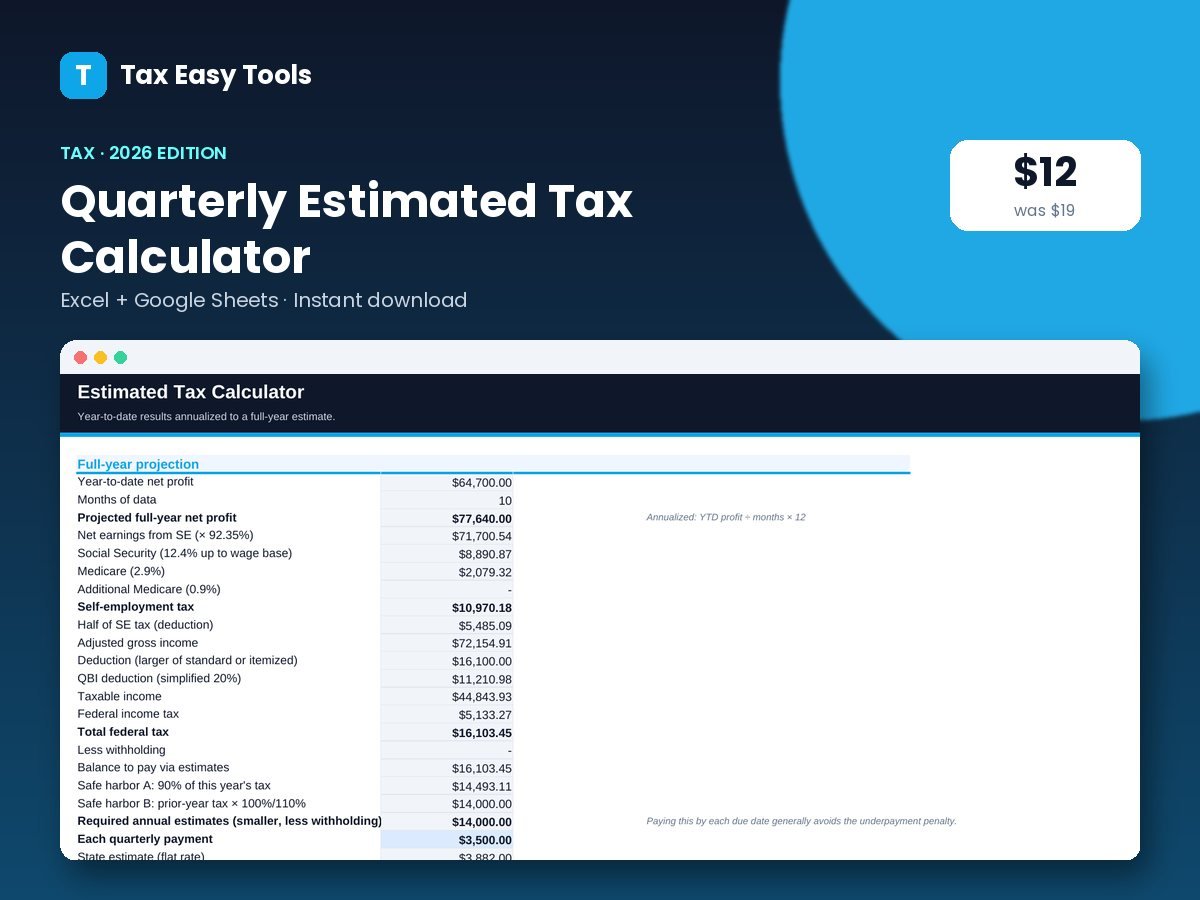
📈 Track this all year: Quarterly Estimated Tax Calculator ($12), the spreadsheet version that updates as you go. Get it
Prefer a human?
Get help from a tax pro
Tax filing, bookkeeping and audit assistance — plus LLC formation, E-2 business plans and entity-choice planning — from Simplybestservices LLC (SBS), the team behind Tax Easy.
Make it automatic
Quarterly Estimated Tax Calculator
Know exactly what to pay the IRS each quarter—with safe-harbor checks built in.
$12 $19
How to use the Estimated Tax Penalty Calculator
- Enter this year's and last year's total tax and your withholding.
- Enter what you paid by each quarterly due date.
- See the required payments, the shortfall each quarter and the estimated penalty.
Questions about the Estimated Tax Penalty Calculator
When is there no penalty?
Generally when you owe less than $1,000 after withholding and credits, or when withholding plus on-time estimates cover the smaller of 90% of this year's tax or 100% of last year's (110% if last year's AGI was over $150,000).
How is the penalty calculated?
It works like interest: the IRS underpayment rate (the federal short-term rate plus 3 points), applied to each quarter's shortfall from its due date until it's paid or the return's due date. For 2026 the rates were 7% (Q1), 6% (Q2), 7% (Q3), 7% (Q4), and 8% from January 1, 2027.
My income came in unevenly. Can I lower the penalty?
Possibly. The annualized income installment method (Form 2210, Schedule AI) can reduce it. This calculator uses the regular method, so ask a pro.
Related tax guides
- Quarterly Estimated Taxes: Safe-Harbor Rules and Tips to Avoid Penalties
- What's New for Tax Year 2026 (Returns You'll File in 2027)